Climate, Conflict and the New Resource Race
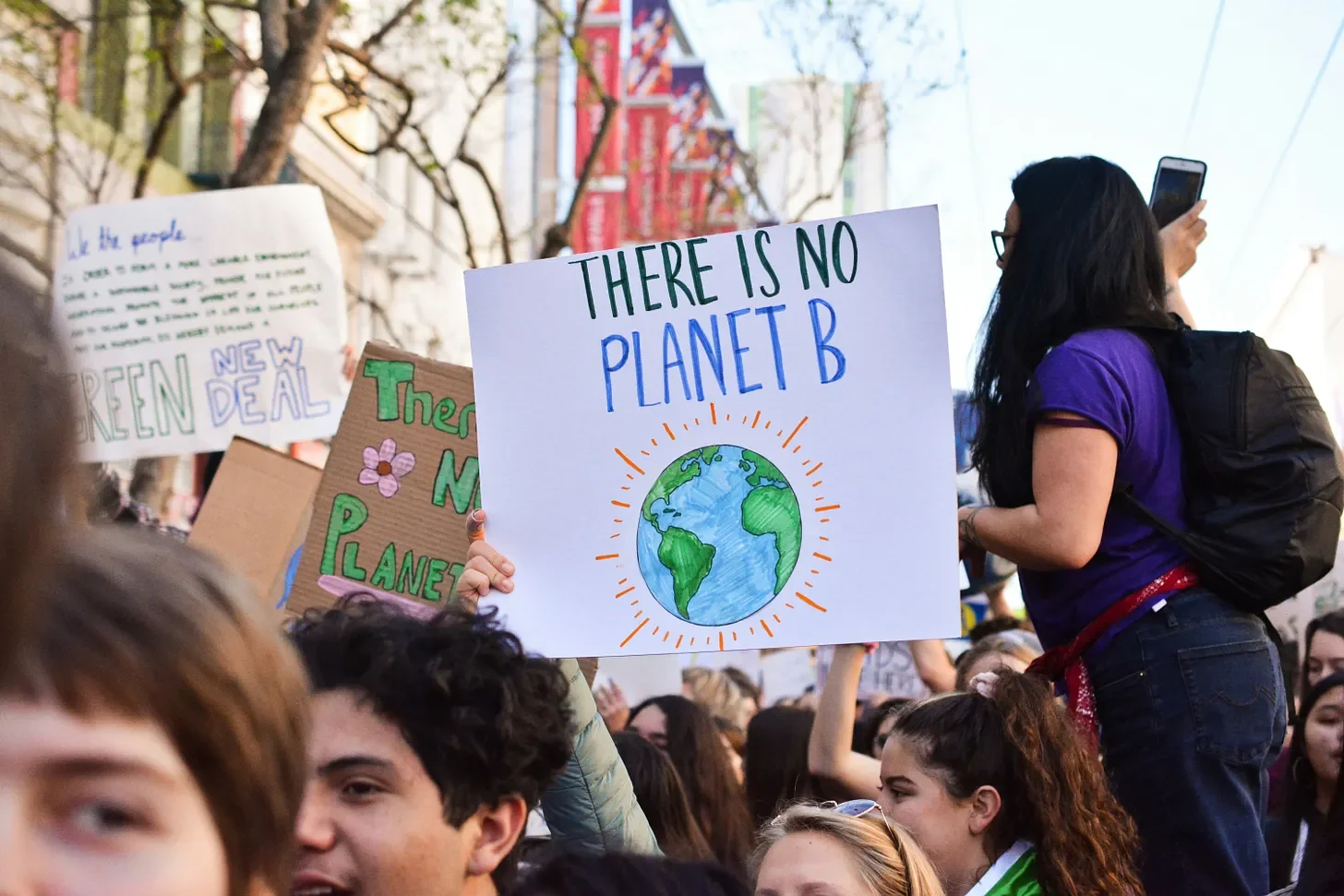
Climate change is often described as an environmental problem.
For this episode of Frontline Voices, I wanted to look at it from a different angle: what happens when environmental breakdown begins to affect food, resources, migration, political stability and the relationships between states?
Because at that point, climate change is no longer only about the environment. It becomes a question of human security.
Looking at the whole system
My first guests are Bru Pearce and Guy Jackson from Envisionation, who are working on what they call the Biosphere Restoration Plan.
Their starting point is simple but challenging. Rather than asking only how we reduce emissions, they ask what has happened to the wider natural systems that support life on Earth.
Forests have disappeared. Oceans have been degraded. Soils have been damaged. Biodiversity has been lost.
Bru and Guy argue that we need to think about restoring those systems, rather than simply trying to slow their decline.
During our conversation, they describe the idea of creating a digital twin of the Earth — bringing together environmental, agricultural, economic and human data so that we can see more clearly what is happening and where pressures are building.
What interested me particularly was their belief that environmental restoration also needs to make economic sense.
They argue that governments and businesses are much more likely to act at the scale required if restoring nature is treated as an investment rather than simply an expense.
That raises difficult questions, of course, about who pays, who benefits and how we place a financial value on something as fundamental as a healthy planet.
When climate becomes geopolitics
The second half of the episode takes the conversation in another direction.
I speak with Sabrina Kaschowić from the Friedrich-Ebert-Stiftung, whose work looks at climate security through feminist and decolonial perspectives.
Sabrina explores what happens when governments begin treating climate change as a security issue.
That can be useful. Security language can make governments pay attention.
But it can also create new problems.
The transition away from fossil fuels requires enormous quantities of minerals such as lithium and graphite. These resources are found unevenly around the world, which means that the green transition is also creating new forms of geopolitical competition.
Ukraine, Greenland and parts of Africa are becoming increasingly important because of the resources beneath their soil.
The danger is that climate policy becomes less about protecting people and the planet and more about powerful states securing access to the resources they believe they will need in the future.
Security for whom?
This brings us back to one of the questions I keep returning to in Frontline Voices:
Whose security are we talking about?
A country may become more secure because it has access to critical minerals.
But what happens to the community living above those minerals?
Who makes the decisions?
Who receives the economic benefits?
And who carries the environmental cost?
Sabrina argues that climate justice must include questions of gender, inequality, ethnicity, economic power and historical responsibility.
Countries that industrialised first have contributed far more to climate change, while many of the countries experiencing its most serious consequences have contributed comparatively little.
A genuinely fair response therefore cannot simply demand that every country follows the same path.
Reasons for hope
This episode contains some stark warnings.
We talk about food insecurity, ecosystem breakdown, resource competition and the possibility that climate change will increase pressure on already fragile societies.
But there is also hope.
Bru and Guy remind us that damaged ecosystems can recover.
Sabrina points out that the transition towards cleaner energy is now being driven not only by governments but also by technology and economics.
We know far more about these problems than we once did.
The real question is what we choose to do with that knowledge.
Climate change does not recognise borders.
Neither do the systems that provide us with food, water, clean air and a stable environment.
Perhaps the greatest challenge is learning to think about security in the same way — not simply as something a country protects for itself, but as something we ultimately share.